

To create a space that provides the best educational environment for providers and children, it takes a strong team. Many people need to work together for a successful facilities project, and each role is important. From architects to fire marshals to plumbers, strong stakeholders make child care facility projects possible. If you are thinking about a new project, consider reading our Development & Financing Guide before you put together your plan, budget, and team.
LISC's Role
Although it is easy to focus on the funding, the RICCELFF is primarily a technical assistance provider. Technical assistance with the RICCELFF team can involve anything from managing facility priorities to conducting compliance and is always aimed at supporting providers in offering high-quality, functional space. Starting with early feasibility and brainstorming conversations all the way through post-occupancy visits, LISC works with many grantees and partners from beginning to end.
“Many child care providers don’t go into the profession of providing child care to be real estate developers or project managers,” said Erin Cox, AIA, Deputy Director at LISC. “Yet, [when managing a grant] they’re often put in the position of doing that job at the same time that they’re managing their day-to-day work with the child care [facility].” It can be overwhelming for one person or a small team to juggle so many roles at once, but LISC can help ease the burden for grantees through providing technical assistance. “We really want to make [managing a grant] easy for providers,” Cox said, “[so they can] continue providing care for kids and do it as swiftly as possible.”
In turn, this support makes work go more smoothly for project consultants, too. Madeline Clappin of Arketekcher, an architecture firm, shared that working with LISC “kept a lot of the administrative things [like invoice processing and documentation] off the plate of the provider,” which helped Arketekcher focus on sharing their expertise rather than chasing paperwork. LISC’s partnership also encouraged accountability for “good design and good decisions” by providing additional oversight of fund management, she said.
Regular check-ins throughout LISC grant terms help ensure efficient use of time and funds, while offering problem-solving support when necessary. Rebecca Micheletti of Clark Street Daycare said of LISC’s support: “I felt very comfortable and confident in what I had to do on the project because I knew you were only an e-mail away. [The regular check-ins] were really helpful because it kind of helped me see like the light at the end of the tunnel too, [that we were] actually making progress.”

Child care facilities are businesses, and many are small businesses that can benefit from technical assistance and capacity building. As an intermediary and community development financial institution (CDFI), LISC has an abundance of business and financial literacy resources and partner organizations that can support child care providers in their business capacity.
Ultimately, LISC is an “ally,” said Michael Bevivino, Principal Architect and Partner at Arketekcher. “We can bounce [ideas] off of [the team] and have conversations…Not having to do this all on an island by ourselves is unique compared to anything else that we do. It’s something that we’ve been really grateful for. [Child care] is such a complex and complicated topic, so to have a partner [in LISC] has been amazing.”
Architects & Design
It is a good idea to have an architect or architect and design firm involved in your facilities project from the beginning. An architect can provide you with a cost estimate and a design plan for your project, both of which are necessary before construction begins. Some architects specialize in child care spaces and/or playgrounds. Consider engaging with an expert who is familiar with child care licensing and regulations.
Rebecca Micheletti of Clark Street Daycare worked with Arketekcher, a firm experienced in child care design, on an expansion project. Their experience “was definitely a huge thing,” she said. “They were very knowledgeable. They knew what needed to be done…I think having someone [less experienced] would have been way more difficult.”

An experienced architect can help you navigate the rules and regulations specific to child care from the beginning of the process. Minerva Waldron of Over the Rainbow worked with Kenneth Filarski, FAIA, to install electrical equipment with grant dollars. “It was so helpful to have him come and walk through this through the space and give us ideas on what to do,” Waldron said. “He pretty much directed the whole project, so he told the electrician why he wanted [certain things], which was great because that took that off my back. Having a professional like Ken who knows what he’s doing…it was amazing.” Filarski also supported the planning process by attending a zoning hearing.
Regulatory Officials
Regulatory officials like the local authority having jurisdiction (AHJ), municipal planning boards, fire marshals, and licensors may seem intimidating, but engaging with them early in a project can help build positive relationships and support a successful project. Having an established relationship can also facilitate smoother inspections or projects in the future and build trust between providers, vendors, licensors, and officials.
It’s helpful to work with companies that are comfortable communicating with regulatory officials throughout your project. Building a team that has or can build relationships with other parts of the team independently supports clear communication and efficiency.
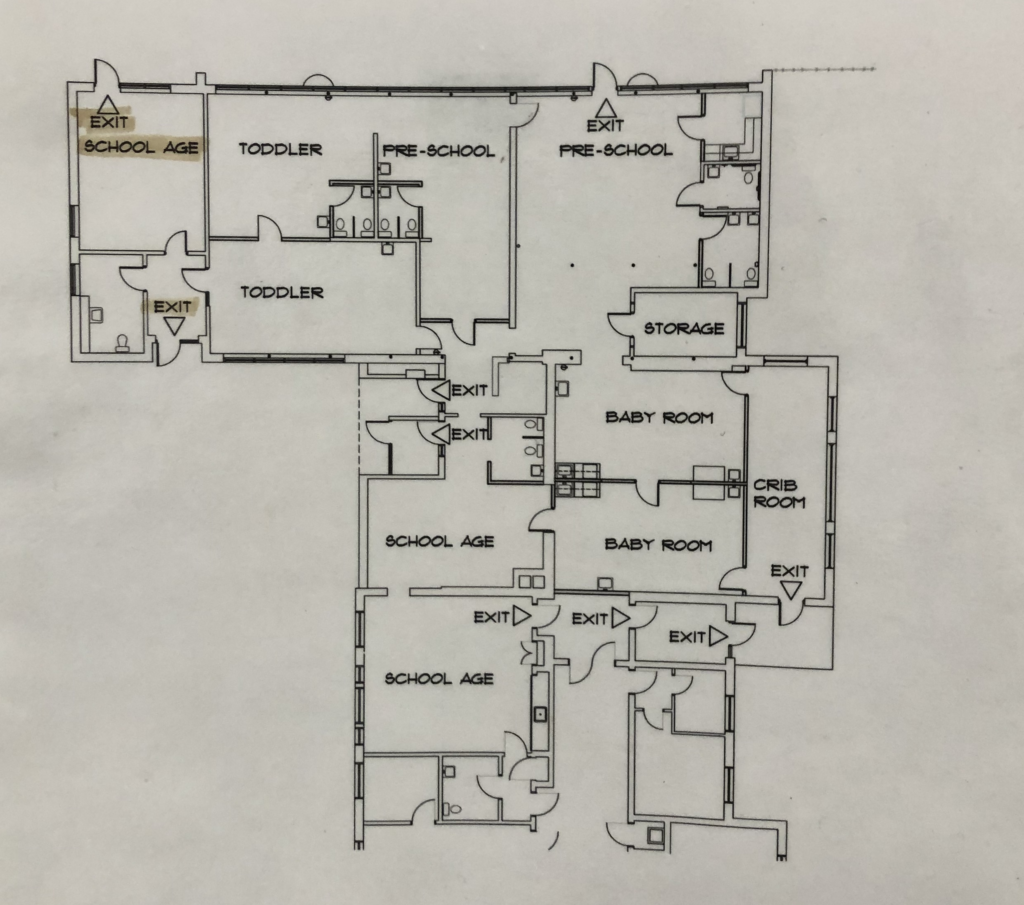
“You want to make sure that your contractor is willing to reach out to your local AHJ: your city planner, or whoever it is that manages the zoning, planning, and code requirements,” said Erin Cox, AIA, Deputy Director at LISC. “We’ve also found that relationships are important…having a good relationship with the city, having a good relationship with the contractor are things that are very helpful along the path to project completion.”
Grand funds promote opportunities for some companies to build these relationships with officials, which makes it easier for them to continue working on child care projects in Rhode Island. After completing projects, said Michael Bevivino of Arketekcher, “we have a couple [municipal planning departments] that we have relationships with. Now that we have some newer projects [after the grant period ended], I can call them and work through the code with them…Having partners on the permitting side and the fire marshal’s office is an amazing result of [LISC funding].”
Contractors, Tradespeople, & Suppliers
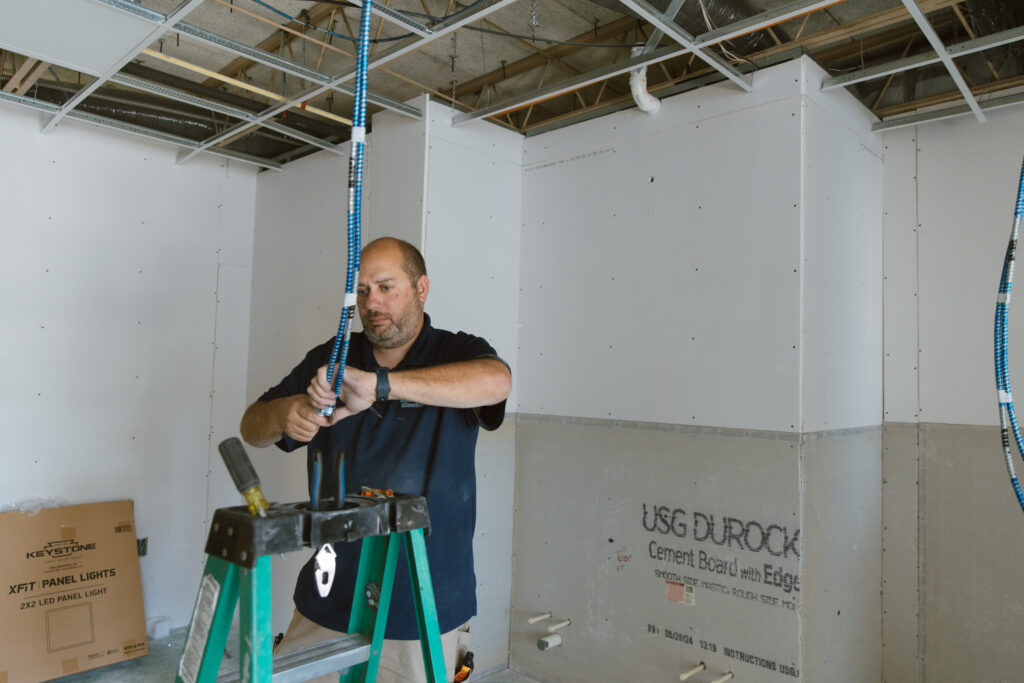
RICCELFF team members often joke that “it all comes down to toilets” in child care facilities, but plumbers aren’t the only ones necessary to make many facilities projects successful. Engineers, electricians, HVAC professionals, furnishing vendors, contractors, and others may also need to be part of your team. Timing considerations are important to discuss with potential vendors; if your facility is operational during daytime working hours, keep in mind that your vendors may charge extra for completing work during evening or weekend hours when children are not present.
Vendors do not necessarily need to be child care experts, but think about the needs of your project. At a minimum, vendors should be willing to learn about relevant child care regulations and best practices and communicate with the rest of your team.
Specialty vendors like Lakeshore Learning, which supplied furnishings and equipment for several grant recipients, may be a good choice for some projects. Tyler Bickford, Regional Manager at Lakeshore Learning, emphasized that furnishing vendors experienced with child care “understand the wear and tear that is going to occur on a day-to-day basis” and design products accordingly, while furnishings from big-box stores “might work for your home…but something being used by 15-20 children is going to break down pretty quick.”
Likewise, electricians, HVAC professionals, and contractors who are familiar with a child care setting may be the best fit for your project.
Quality Experts
Child care facility licensing requirements are updated regularly to match evolving best practices and to support the health and safety of Rhode Island children in care, but many people don’t think about the steps that come between updating a licensing requirement and implementing it in child care facilities on the ground. Providers want to stay up-to-date and make facilities improvements as necessary, but they may not know how to take the right steps towards making it happen or have room in the budget to complete a construction project.
Subject-matter experts like Certified Playground Safety Inspectors (CPSIs) and LISC’s RICCELFF team can help providers identify the most pressing health and safety issues or highest-priority improvements at a facility. It is worth asking vendors if they have any training related to child care facilities that may help inform their decisions and work. For example, Carlos Menendez, a contractor for a few RICCELFF-supported projects, has taken a CPSI course with LISC. He says that the information from the course made him look at outdoor play spaces in a new way, and he’s now aware of safety hazards for children that he hadn’t known to look for before. LISC’s checklists and tools can also help providers identify the most important improvements.
When assembled thoughtfully, a good team can help your child care facility project go smoothly. It can take more stakeholders than some people expect to see a project through, and choosing experts and vendors you trust can make all the difference. Reach out to the RICCELFF for technical assistance if you aren’t sure where to start.